How Much Does an Infrared Sauna Cost? 2026 Price Breakdown
The honest answer is that an infrared sauna can cost anywhere from $150 to over $20,000, and the format you choose matters far more than the brand. A sauna blanket and a cedar outdoor barrel are both "infrared saunas," yet they are two orders of magnitude apart in price. This guide breaks down every real 2026 price tier, the hidden costs that catch buyers off guard, and the simple break-even math against spa sessions so you can decide where your money actually goes.
- 01Format drives price: blankets $150-600, portable tents $200-700, cabins $1,500-12,000+, outdoor luxury $8,000-20,000+.
- 02Most home cabin buyers land in the $2,000-5,000 range for a solid 1-2 or 2-3 person wooden unit.
- 03Hidden costs add up: freight ($100-400+), a 240V electrician on some larger units ($150-600), plus delivery, assembly, and accessories.
- 04Break-even is fast: at $25-75 per spa visit, a home cabin used 3x a week usually pays for itself in under a year.
The Six Price Tiers, Explained
Infrared saunas sort cleanly into six tiers in 2026. Each tier is really a different product solving a slightly different problem, from a packable accessory you store in a closet to a permanent backyard structure. Here is the full range at a glance, then a closer look at each.
Sauna Blankets: $150-600
A sauna blanket is a padded, zip-up envelope lined with far-infrared heating elements. You lie inside it on a bed or floor with your head out. Entry models start around $150-300, while well-regarded brands with better materials, controllers and warranties run $400-600. There is no construction, no ventilation to plan, and it plugs into a standard outlet. The trade-off is that you cannot sit upright, only one person uses it at a time, and the enclosed-body experience feels different from a cabin. For the smallest budgets it is the cheapest legitimate way in.
Portable 1-Person Saunas: $200-700
Portable saunas are collapsible tent-style enclosures with a fabric shell, a small chair, and infrared panels inside. Your head pokes out the top while your body sits in the heat. Prices run roughly $200-700 depending on panel quality and build. They fold flat for storage, plug into a normal outlet, and suit apartments and renters who want to sit upright without committing to a wooden cabin. If this is your tier, our roundup of the best portable infrared saunas walks through the models worth considering.
Entry 1-2 Person Cabins: $1,500-3,500
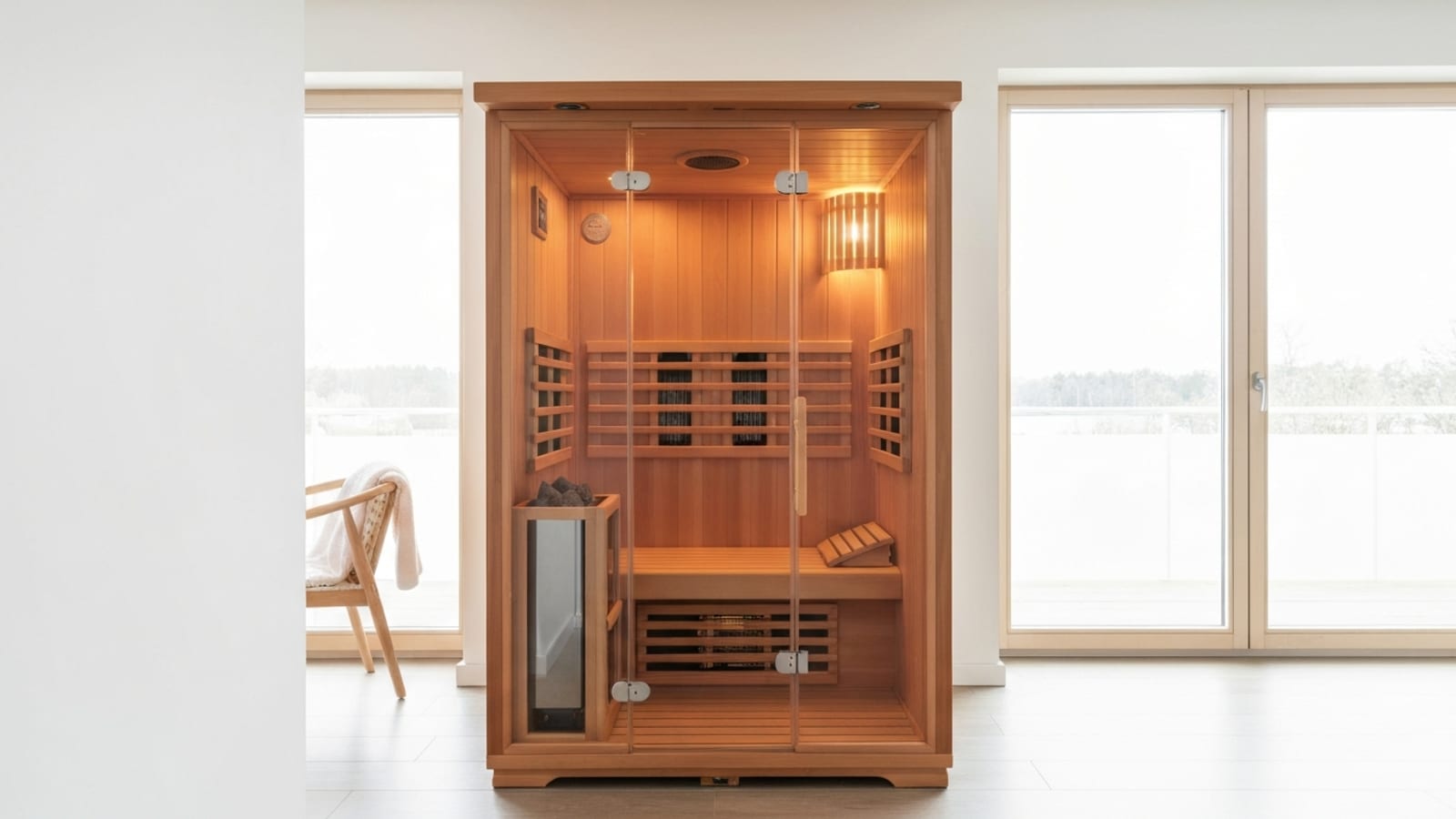
This is the first tier of real wooden cabins, usually hemlock or cedar, with carbon or ceramic far-infrared heaters. A 1-person unit can start around $1,500, with most 1-2 person cabins landing between $2,000 and $3,500. They ship as flat panels you assemble in 30-60 minutes and typically run on a standard 120-volt outlet. For shoppers focused on value here, our guide to the best budget infrared saunas and the best 2-person infrared saunas cover the units that hold up over time.
Mid Premium 2-3 Person: $3,500-6,000
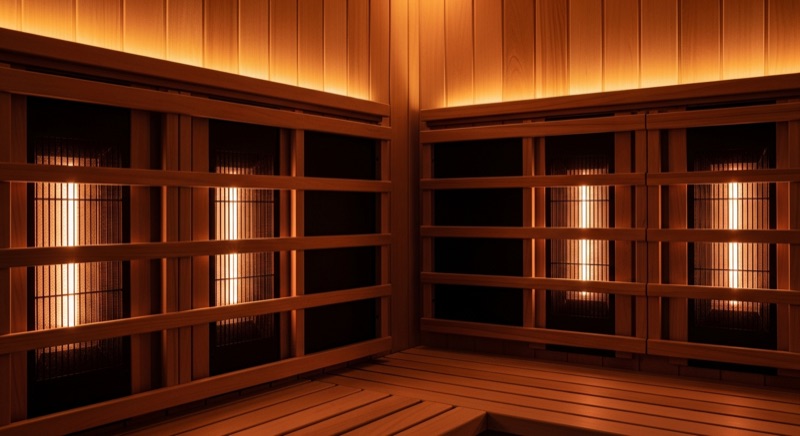
The mid-premium tier buys better heaters with more even coverage, nicer cabinetry, glass doors, lower EMF emissions, and longer warranties. Expect $3,500-6,000 for a 2-3 person cabin from a reputable brand. This is the sweet spot for couples and small families who use the sauna regularly and want it to feel like a finished piece of furniture rather than a starter kit.
High-End Full-Spectrum 3-4 Person: $6,000-12,000+
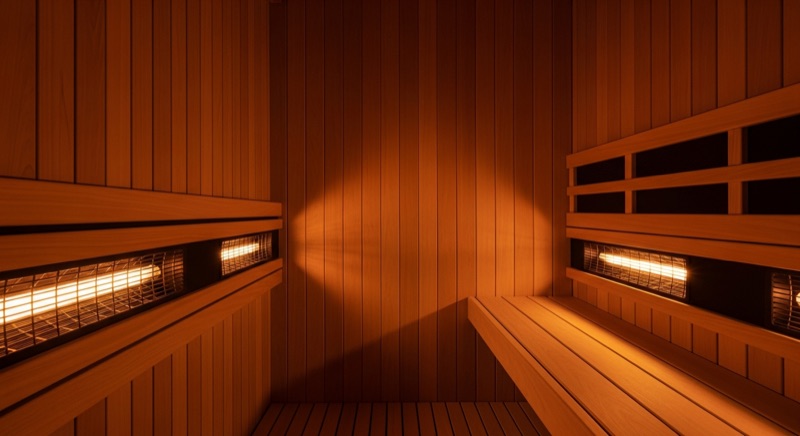
Full-spectrum saunas add near and mid infrared on top of far infrared, with high-output emitters, very low EMF designs, premium cedar, and smart controls. A 3-4 person full-spectrum cabin typically runs $6,000-12,000, and feature-loaded flagships push higher. Many units in this tier require a dedicated 240-volt circuit because the combined heater wattage exceeds what a normal 120-volt outlet supplies.
Outdoor Barrel and Luxury: $8,000-20,000+
Outdoor saunas, including cedar barrels, cube designs and architectural builds, carry weatherproof construction, heavier insulation, and larger capacities. Prices start around $8,000 and climb past $20,000 for luxury and custom installs. Beyond the unit itself, an outdoor sauna usually needs a level pad or foundation and an outdoor-rated electrical run, which is part of why this tier sits at the top of the range.
The Hidden Costs Buyers Forget
The sticker price is rarely the final price. These add-ons can quietly add 10-25% to an entry or mid-range cabin, and far more if a luxury outdoor install needs site work. Plan for them before you buy.
Blankets and portables often ship free or for a small fee. Wooden cabins are heavy and frequently ship by freight, which can add $100-400 or more. Outdoor and luxury units, being far heavier, can run several hundred to over a thousand dollars in freight, sometimes with a liftgate or curbside-only surcharge.
Smaller cabins run on a standard 120-volt outlet. Larger full-spectrum and some 3-4 person units need a dedicated 240-volt circuit. Having an electrician run that circuit typically costs $150-600 depending on distance to the panel and local labor rates, and more if the panel needs upgrading.
Most cabins are owner-assembled in under an hour, so labor is free if you do it yourself. But heavy units may need a second person or paid in-home delivery, and outdoor saunas can require professional assembly and a prepared pad or foundation, which adds materials and labor.
Budget for the small extras: a backrest, towels, a wood cleaner or sealant, a Bluetooth or aromatherapy add-on, and the occasional replacement bulb or heater. None are large on their own, but together they commonly add $100-300 in the first year.
Electricity is the one cost that continues after purchase, though it is smaller than most people expect. A typical home session draws a modest amount of power, usually a few cents to well under a dollar depending on your rate and session length. We break the numbers down in our infrared sauna electricity cost guide, but for budgeting, roughly $10-20 a month for regular use is a safe planning figure.
Home Ownership vs Spa Sessions: The Break-Even Math
Pay-per-visit infrared sessions at spas, wellness studios and gyms typically run $25-75 each in 2026, with monthly memberships often in the $50-200 range. That recurring spend is what makes home ownership compelling for anyone who saunas regularly. The math is simple: divide the cost of a home unit by your per-session spa price to find how many visits it would take to break even.
Even a high-end $8,000 cabin breaks even against $40 spa sessions in well under two years at three visits a week, and after that the marginal cost per session is just a few cents of electricity. The home unit also wins on convenience, privacy and no scheduling. The spa makes sense only if you genuinely use it rarely, want to try infrared before committing, or cannot fit any unit at home. If you want to keep upfront cost minimal while still owning, a DIY infrared sauna build using panels in a closet or spare room can undercut even entry cabins, and for those weighing infrared against a traditional setup, our infrared vs traditional sauna comparison covers the cost and experience differences.