Best Portable Infrared Saunas 2026: Tent Saunas, Blankets, and Pop-Up Options
Portable saunas are for people who rent, have no space for a cabin, or want to try infrared before committing to $1,500 or more. Here are the best options in both tent and blanket categories, plus an honest comparison of what they deliver versus a full cabin.
Two categories of portable sauna
You sit inside, head outside
A folding fabric structure with a zipper enclosure. You sit on a stool or chair inside the tent while your head sticks out through a hole at the top. A heating unit (usually a steam or FIR rod) sits inside the enclosure. Air inside the tent heats up to 140 F.
Price range: $150-350. Sets up in 5-10 minutes. Stores in a carry bag. Runs on 120V. The closest experience to a cabin for the price.
You lie down, head outside
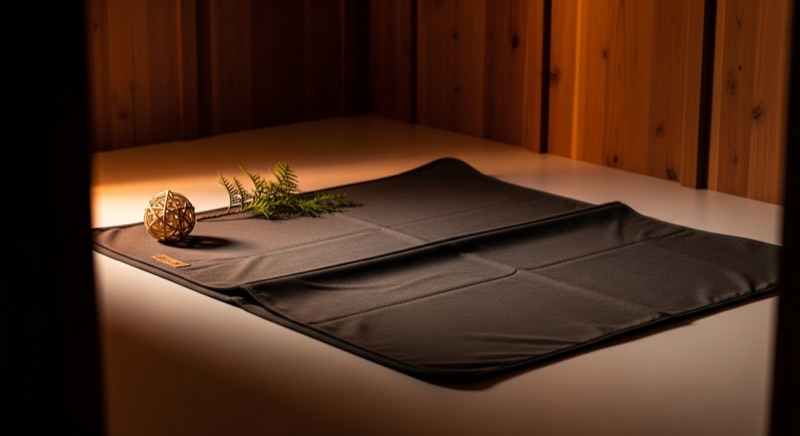
You lie on a flat surface and the blanket wraps around your body. Heating is primarily by direct contact conduction from the heated fabric surface, with additional FIR emission. Your head, neck, and face remain outside.
Price range: $280-699. More compact storage than a tent. Better for people who want to lie down. Heat profile differs from air heating in a tent or cabin.
Comparison: best portable saunas 2026
| # | Model | Best for | EMF | Max temp | Score | Price | |
|---|---|---|---|---|---|---|---|
| 01 | SereneLife SLISAU30BK SereneLife | Best budget tent sauna | N/A | 140 F | 7.8/10 | $150-300 | Check → |
| 02 | ZONEMEL Portable Sauna ZONEMEL | Budget tent, value pick | N/A | 140 F | 7.5/10 | $200-350 | Check → |
| 03 | SereneLife Panel Sauna SereneLife | Best pop-up panel cabin | Low | 150 F | 8.0/10 | $500-800 | Check → |
| 04 | Durherm Portable Sauna Tent Durherm | Low-EMF fabric tent | Low | 150 F | 7.7/10 | $300-450 | Check → |
| 05 | HigherDOSE Sauna Blanket V4 HigherDOSE | Premium blanket | Low | 158 F | 8.8/10 | $699 | Check → |
| 06 | Lifepro RejuvaWrap Lifepro | Budget blanket | N/A | 176 F | 8.2/10 | $280-399 | Check → |
SereneLife SLISAU30BK
The SereneLife is the entry-level benchmark in tent saunas. Dimensions of 35" W x 71" H, 1,050W heating unit, max temp 140 F, 60-minute timer. Runs on a standard 120V outlet. Over 2,700 Amazon reviews averaging 4.2/5 stars make it the most validated budget option in this category.
Setup takes about 5-10 minutes once you understand the folding mechanism. The chair or stool is not included and needs to be sourced separately. The heating unit sits inside the tent floor and the temperature distribution is not as even as a cabin with multiple panels.
ZONEMEL Portable Sauna
The ZONEMEL is a popular alternative in the same price bracket as the SereneLife. Slightly more expensive but with a reputation for better fabric quality and a slightly more stable frame. The heating unit and temperature range are comparable. If the SereneLife is unavailable or priced high at the time of purchase, ZONEMEL is a reliable alternative. Same fundamental limitations apply: head outside, uneven heat distribution, no comparison to a cabin.
Sauna tents vs portable sauna cabins
Within the portable category there are two real formats, and people searching for a "sauna tent" and a "pop-up sauna" often want different things. The first is the zip-up fabric tent covered above: a lightweight enclosure on a collapsible frame, your head out through a top opening. The second is a foldable panel cabin, built from rigid carbon-fiber panels that snap together into a small booth you sit fully inside, usually with a bench and a foot heater.
A fabric tent suits renters, travelers, and anyone who needs to pack the whole thing into a bag between sessions. It is the cheapest way to get real infrared sweating at home. A panel cabin suits people with a spare corner who want a sturdier build and more even heat without wiring in a fixed 240V cabin. It weighs more (often 40-60 lbs) and takes up more room, but it feels closer to the real thing. If you only have space for one person, our 1-person infrared sauna guide compares compact fixed cabins that fit the same footprint.
What to look for in a portable or tent sauna
- Heater type. Carbon-fiber FIR panels heat more evenly and quietly than a single ceramic rod or a steam pot. Steam-based tents are technically not infrared, so check the listing.
- EMF. Cheap tents rarely publish figures. Treat unlabeled units as unknown and favor models that state low-EMF carbon heaters with test data. More on this in our low-EMF infrared sauna guide.
- Foot heater. A separate heating pad for your feet makes a real difference in comfort, since a floor-mounted heater alone leaves feet cool. Better tents and most panel cabins include one.
- Chair included. Many fabric tents do not ship with a stool. Budget for a folding chair if the listing does not mention one.
- Size and weight. Fabric tents run 35" wide and pack into a bag; panel cabins need a permanent-ish spot. Check interior height if you are tall.
Rigid carbon-fiber panels, built-in bench and foot heater, up to 150 F. Low-EMF carbon heaters, more even heat than fabric. Heavier and needs a fixed spot, but the closest portable to a real cabin.
Check price →Fabric pop-up with low-EMF carbon panels and an included foot heater and chair. Pricier than a SereneLife but publishes EMF data, which most budget tents do not.
Check price →If low EMF is a priority, the panel cabins and a few named tents above are the ones that actually publish carbon-heater EMF figures. Generic sub-$200 tents usually do not, so treat those as unrated rather than assuming they are low. A far infrared (FIR) carbon panel is the type to look for over a single ceramic rod.
Most of these models ship to Canada through Amazon.ca, though pricing and stock vary and some low-EMF panel cabins are easier to find in the US. If you are shopping from Canada, check the .ca listing directly, confirm 120V compatibility (all of these run on standard outlets), and factor in that shipping can add a week or two on the panel cabins.
Blanket options for portable use
For detailed blanket reviews including HigherDOSE V4 and Lifepro RejuvaWrap, see our dedicated infrared sauna blanket guide. In brief:
Amethyst/tourmaline layers. Best brand credibility. No bare PVC contact. Good for health-conscious buyers.
Check price →600W, 77-176 F range, frequently on sale. Best entry-price blanket option.
Check price →Portable vs. cabin: what you give up
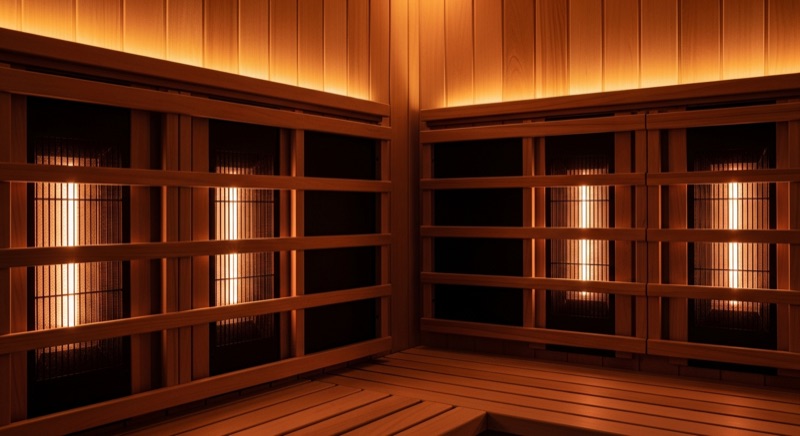
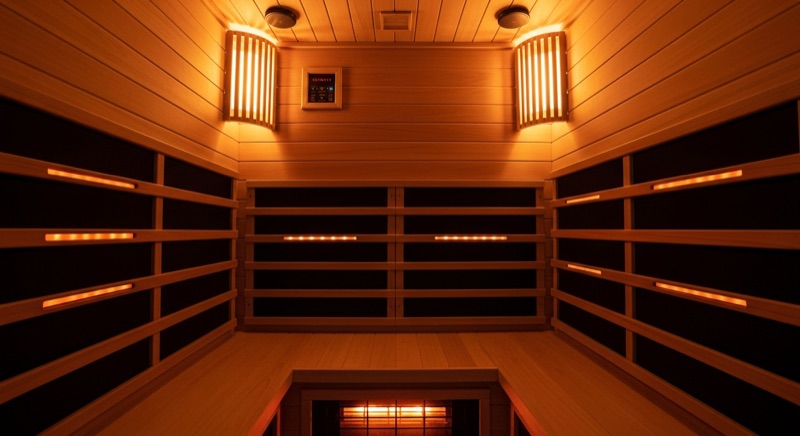
A tent sauna with head outside does not heat your head, neck, and chest the same way a closed cabin does. A 2-person cabin at 140 F with six carbon panels surrounds your entire body in heated air. The thermal exposure profile is genuinely different.
Both produce genuine sweating and FIR benefit. But they should not be compared directly. A tent sauna for $200 is a different product from a $2,000 cabin - not just a cheaper version of the same thing. If you have the space and budget, a full cabin is a meaningfully better experience. Portables are a practical solution for a real constraint, not an equivalent alternative.