Infrared Sauna and Diabetes: Safety, Blood Sugar and Protocol
Most of what gets written about sauna and diabetes leads with benefits. That is the wrong order. The safety questions are the higher stakes half of this topic, because diabetes brings a specific set of complications that change how your body handles heat: blunted heat sensation in the feet, impaired sweating and blood pressure control, fluid shifts that move glucose readings, and hypoglycaemia symptoms that look almost exactly like heat stress. Here is the careful version.
This article is general information, not medical advice. Diabetes is not one condition with one answer, and sauna safety depends on your complications, your medication, and your glucose control. Talk to your doctor or diabetes team before you start, especially if you take insulin or a sulfonylurea, have any nerve damage, or have heart disease.
Nothing here suggests that sauna treats, reverses, or cures diabetes. It does not. Heat exposure is at best a small addition alongside medication, food, movement, and monitoring.
- 01Peripheral neuropathy is the single biggest sauna risk in diabetes: you can burn your feet without feeling the warning.
- 02Hypoglycaemia and heat stress share symptoms, so shakiness or confusion in a sauna should be treated as a possible hypo until proven otherwise.
- 03Evidence on heat and insulin sensitivity in type 2 diabetes exists but is limited, mostly small and short. Sauna is not a treatment.
- 04Insulin and diabetes devices have manufacturer temperature limits. Check them before taking anything into a hot cabin.
- 05Start at 10 to 15 minutes and 110 to 120 F, with glucose checked before and after and fast acting carbohydrate within reach.
The Four Risks That Are Specific to Diabetes
Anyone using a sauna deals with dehydration, low blood pressure on standing, and overheating. Diabetes adds complications that change the shape of each of those risks, and the changes are worth understanding one at a time rather than as a general warning to be careful.
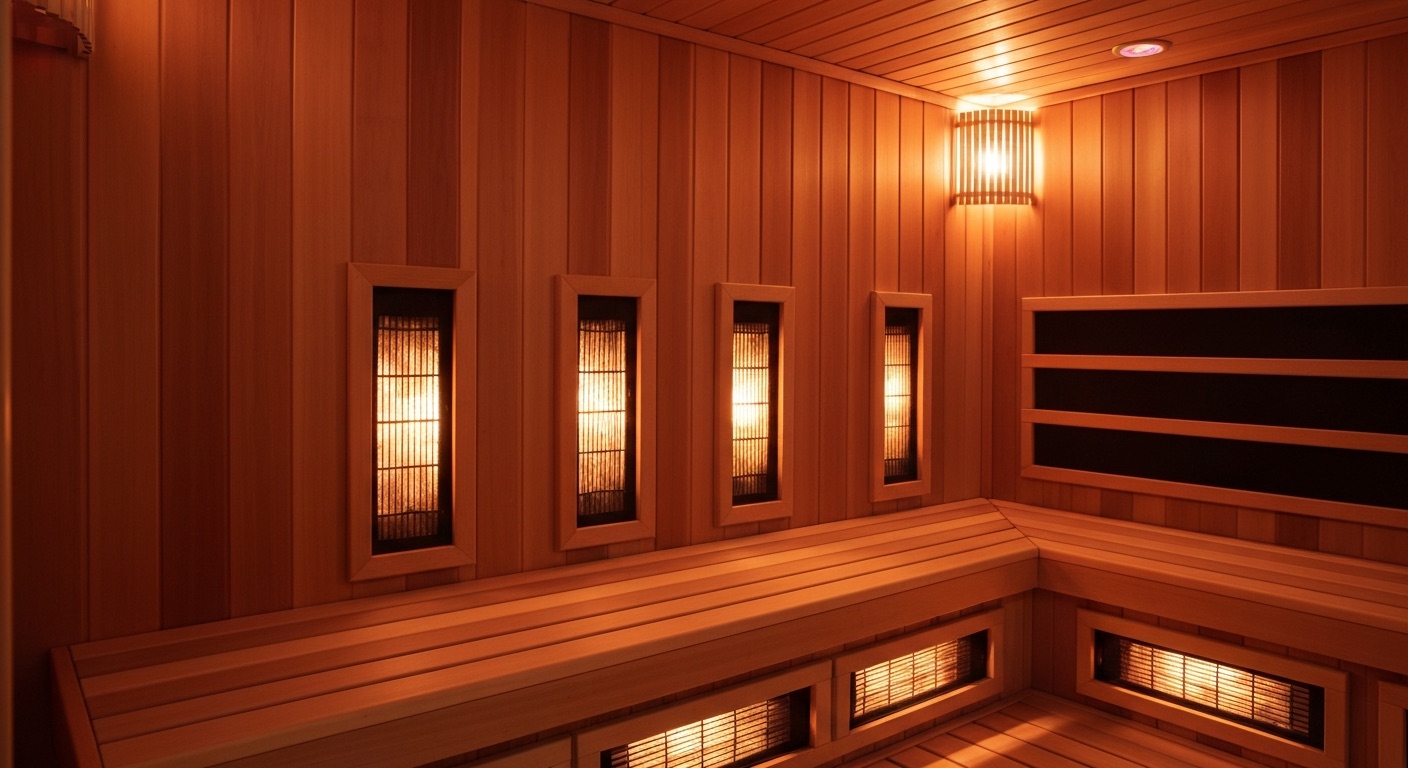
Nerve damage in the feet and lower legs reduces how well you sense temperature. The protective reflex that normally makes you shift away from something too hot may simply not fire. In a cabin where heater panels sit at bench and floor level, bare feet are the part of you closest to the heat and the part least able to report a problem. A burn or blister on a neuropathic foot is not a minor injury, because reduced circulation and slow healing can turn it into a wound that lasts weeks.
Autonomic nerve damage can impair sweating, which is the main way your body sheds heat in a sauna. Less sweat means core temperature climbs faster than it should for a given session. The same nerve damage can blunt the reflexes that keep blood pressure stable when you stand up, so the drop many people feel when leaving a hot cabin can be sharper and more likely to cause a faint.
Sweat loss reduces plasma volume, which concentrates what is left in the blood. A glucose reading taken while noticeably dehydrated may not reflect what your glucose was doing an hour earlier. Dehydration also matters in its own right for kidney function, which is already a concern for many people with long standing diabetes.
Shakiness, sweating, dizziness, a racing heart, confusion: those are hypo symptoms and they are also what a hot room feels like when you have been in it too long. If you take insulin or a sulfonylurea, you can have a genuine low in a sauna and read it as heat. This overlap is the reason for testing before and after, keeping fast acting carbohydrate within reach, and not going in alone while you are learning how your body responds.
Do not use an infrared sauna without explicit medical clearance if any of these apply to you: diabetes that is unstable or poorly controlled, advanced peripheral or autonomic neuropathy, an active foot ulcer or any open wound on the feet, significant cardiovascular disease, hypoglycaemia unawareness, or a recent history of severe lows. Leave a session immediately and treat a suspected low if you feel shaky, confused, unusually sweaty, faint, or nauseated, and do not assume it is only the heat.
Insulin, Pumps, CGM Sensors and Meters in the Heat
This is the practical detail people most often get wrong, and it has nothing to do with your body. Insulin is a protein and it degrades when it gets hot. Insulin that has been sitting in a warm cabin, or in a bag in a hot changing room, may not work the way you expect afterward, and there is no reliable way to eyeball whether a vial has lost potency.
Devices have the same problem in a different form. Insulin pumps, continuous glucose monitors, and blood glucose meters all ship with a stated operating temperature range from the manufacturer, and a sauna cabin can easily sit outside it. Some manufacturers give explicit guidance about saunas and hot tubs, some do not. The only correct move is to look up your specific device in its manual or on the manufacturer support page before your first session, and follow what it says about disconnecting, covering, or removing hardware. If the documentation is ambiguous, ask your diabetes team rather than running the experiment on yourself.
Two habits make this easier. Keep insulin and spare supplies in a cool bag outside the sauna room entirely, never in a locker next to it or in a car on a warm day. And decide your device plan before you undress, not while you are standing in front of a warm cabin trying to remember what the manual said.
What the Evidence Actually Suggests
Heat therapy has been studied fairly extensively for cardiovascular outcomes, with the largest and most cited work coming from long running Finnish cohort research on traditional sauna bathing. That work is observational, which means it describes an association between frequent sauna use and better cardiovascular outcomes rather than proving that sauna caused them. Our guide on infrared sauna and heart health goes through the strengths and limits of that literature in more detail.
The diabetes-specific picture is thinner. There are small studies and mechanistic investigations looking at heat exposure and markers of insulin sensitivity, glycaemic control, and inflammation, and there is a body of laboratory work on heat shock proteins and their relationship to insulin signalling. What does not exist is a large, long, well controlled trial in people with type 2 diabetes showing that regular infrared sauna use meaningfully improves glucose control. Most of what has been published is small, short, or done in populations that are not people with established diabetes, and results are not consistent enough to build a recommendation on.
So the honest summary is this: heat exposure is biologically plausible as a mild positive for vascular function and possibly for insulin sensitivity, the human evidence in diabetes is limited, and sauna is not a treatment for diabetes. It does not replace medication, diet, or exercise, and no reading of the current literature supports skipping any of those in favour of heat. If you want the clearest expectations on what heat sessions do and do not do for body composition, our piece on infrared sauna and weight loss covers why the scale reading after a session is mostly water.
Mechanisms, framed as mechanisms
The pathways below are the reasons researchers find heat interesting. They are explanations of why an effect might exist, not evidence that it does exist at a size that matters for your HbA1c.
- +Heat shock protein response: heat stress triggers production of heat shock proteins, which have been studied in cell and animal work for their role in protein folding and in insulin signalling pathways. The translation from that laboratory work to glucose control in people with diabetes is not established.
- +Endothelial function and blood flow: heat raises skin blood flow and shear stress on vessel walls, and repeated exposure has been studied as a stimulus for improved endothelial function. Better vascular function is relevant to diabetes because vascular complications drive much of the long term risk.
- +Post-session blood pressure: blood pressure commonly drops for a period after a heat session as vessels stay dilated. That is a benefit for some people and a fall risk for others, particularly with autonomic neuropathy or blood pressure medication on board.
- +Stress and cortisol: a quiet, warm, screen-free 15 minutes reduces sympathetic arousal for most people. Since stress hormones raise glucose, anything that genuinely lowers day to day stress can have an indirect effect on readings. This is a modest and indirect pathway, not a lever.
What Happens to Blood Sugar During a Session
There is no single direction. Several things happen at once and they pull opposite ways, which is exactly why testing beats predicting.
Heart rate rises in a hot cabin and skin blood flow increases, a load that has been compared to light exercise. That can move glucose down. At the same time, sweat loss concentrates the blood, which can make a reading look higher without any real change in the amount of glucose present. Warm skin also speeds absorption from an injection site, so insulin taken shortly before a session may act faster and harder than usual. If you use a sulfonylurea, the risk of a low is already present and heat does not make it smaller.
The practical consequence is not complicated. Test before, test after, and if you use a CGM that stays within its rated conditions, look at the trend arrow rather than a single number. Note what you see over the first several sessions and share the pattern with your diabetes team. The goal is knowing how your body responds, not producing a particular result.
A Cautious Starting Protocol
Once your doctor or diabetes team has cleared you, start well below the general population advice. The usual guidance on how long to stay in an infrared sauna is written for people without complications, and it is the wrong place to begin here.
The session checklist
- 01Check glucose before you go in. If it is low, falling, or lower than you are comfortable with, do not enter. Eat, wait, and retest.
- 02Keep fast acting carbohydrate within arm reach, inside the room, not in a bag down the hall. Glucose tablets or juice, not a snack you have to chew through.
- 03Do not go in alone for your first several sessions. Tell someone you are in there and roughly how long you plan to stay.
- 04Hydrate before and after. Water before the session, more after. Do not use thirst as your only signal.
- 05Keep feet away from heater panels and never rest bare skin against a hot surface. Use a towel under your feet.
- 06Stand up slowly at the end and pause before walking out. Blood pressure often drops after heat, and it can drop harder with autonomic neuropathy.
- 07Inspect your feet after every session if you have any neuropathy, and check the rest of your skin for redness where it was closest to a panel.
- 08Recheck glucose after the session, and again later if it was a longer or hotter session than usual.
- 09Skip the sauna entirely if you are ill, dehydrated, have been drinking alcohol, or your glucose has been unstable that day.
If the first few weeks are uneventful, add time before you add temperature, and add it in small steps of a few minutes rather than jumping to a longer session. There is no duration you need to reach and no benefit that only unlocks at 30 minutes. A short, comfortable, repeatable session that you actually keep doing beats an ambitious one that leaves you dizzy.
Blood Pressure Medication and the Post-Session Drop
Many people with type 2 diabetes also take blood pressure medication, and that combination deserves its own thought. Heat dilates blood vessels, and the effect persists for a while after you step out. If you are already on a medication that lowers blood pressure, the two effects stack, and the moment of standing up at the end of a session is when people feel it most. Our guide on infrared sauna and blood pressure walks through what the readings tend to do and when the drop is a problem rather than a benefit.
The practical fix is boring and effective: sit before you stand, stand before you walk, and give yourself a minute in cooler air before heading for stairs or a shower. If you have fainted or come close to fainting after heat before, that is worth raising with your doctor rather than working around.
Three Claims Worth Pushing Back On
Search results on this topic contain a fair amount of overreach. Three claims in particular come up often enough to name.
The first is that sauna can substitute for exercise in diabetes management. It cannot. Heat produces some cardiovascular responses that resemble light activity, but exercise changes muscle glucose uptake, body composition, and fitness in ways passive heating does not replicate. Treat sauna as something you might do in addition to movement, never instead of it.
The second is that sweating removes sugar or toxins from the body. Sweat is mostly water and electrolytes, and the amount of glucose in it is trivial. Any drop in a post-session reading is about fluid shifts and circulatory load, not excretion.
The third is that infrared is inherently safer than a traditional sauna because the air temperature is lower. Lower air temperature does change the feel of a session, but the burn risk in neuropathy comes from radiant panels and hot surfaces close to skin that cannot report pain, and the cardiovascular load comes from core temperature, not cabin temperature. If you want the general picture on what can go wrong regardless of diabetes, our guide to infrared sauna side effects is the fuller version.
The Summary in Plain Terms
Plenty of people with diabetes use saunas without incident, and there is nothing about the diagnosis alone that puts heat off limits. What changes is the margin for error. Neuropathy removes a warning system you would normally rely on, autonomic involvement weakens two of the reflexes that keep a session safe, and the symptoms of a low look enough like the symptoms of being too hot that you cannot tell them apart by feel.
So the sequence is: get clearance from your doctor or diabetes team, check your device and insulin temperature guidance, start at 10 to 15 minutes and 110 to 120 F with someone nearby, test glucose before and after, keep fast acting carbohydrate in the room, hydrate, stand up slowly, and inspect your feet. Build up only if it stays uneventful.
And keep the expectations honest. The evidence for heat therapy in type 2 diabetes is interesting and thin. Sauna is a pleasant habit with plausible small benefits for vascular function and stress, not a treatment for a condition that needs real medical management. Enjoy it as the former and do not ask it to be the latter.