Quick answer
Beginners: 15-20 minutes at 110-125°F (43-52°C). After 2-4 weeks: 25-35 minutes at 130-145°F (54-63°C). Regular users: 35-45 minutes at 140-155°F (60-68°C). Above 45 minutes shows diminishing returns for most goals and increases dehydration risk.
Duration by Experience Level
Beginner
First 2 weeks
110-125°F (43-52°C)15-20 minutes
Exit whenever you want. Adaptation matters more than duration at this stage.
Intermediate
Weeks 3-8
130-145°F (54-63°C)25-35 minutes
The studied dose. Most cardiovascular research protocols use this range.
Regular
2+ months
140-155°F (60-68°C)35-45 minutes
Full thermal dose. Hydrate aggressively before and after.
These are progressions, not requirements. Some people stabilize at 25-minute sessions indefinitely - that is a valid routine. The progression exists because heat adaptation genuinely requires weeks and trying to rush it increases dropout from discomfort.
How Long for Specific Goals
| Goal | Duration | Temp | Notes |
|---|
| Weight management | 30-45 min | 140-155°F (60-68°C) | ~200-600 kcal heat expenditure per session. Supplement to exercise, not a replacement. |
| Recovery | 20-30 min | 130-145°F (54-63°C) | Post-endurance works well. Post-strength: wait 2-3 hours before entering. |
| Relaxation | 20-30 min | 120-135°F (49-57°C) | Lower temp, moderate duration. Sustainable for daily sessions. |
| Skin and collagen | 20-30 min | 120-140°F (49-60°C) | Consistent frequency matters more than long single sessions. |
| Chronic pain | 30-35 min | 130-145°F (54-63°C) | Research protocols use this range for 6-12 week treatment courses. |
Signs You Have Been in Too Long
The following are exit signals. Not discomfort to push through - actual physiological indicators that your body has reached its limit for that session.
Dizziness
Vasodilation plus mild dehydration. Exit, sit down, drink water immediately. Do not try to tough it out.
Forming headache
Typically a dehydration signal. Don't push through. The headache will worsen after you exit and the heat effect resolves.
Nausea
The body's heat-overload response. Exit immediately, move to cool air, hydrate slowly.
Tingling skin
Circulation redistribution signal. Particularly in hands and feet. Time to cool down.
Pounding heart
Heart rate above approximately 160bpm at rest inside the sauna is a signal for most adults to exit. Some individual variation, but uncomfortable pounding is not normal.
Normal signs that are not exit signals
Heavy sweating, reddening skin, feeling hot (obviously), mild fatigue after the session, and mild heat discomfort inside. These are expected and do not require action beyond maintaining hydration.
How Long Does an Infrared Sauna Take to Heat Up?
Most home units reach 140°F (60°C) in 15-25 minutes from a cold start. Carbon flat-panel heaters are faster: 10-18 minutes. Full-spectrum multi-element systems with ceramic or combination elements: 18-25 minutes. Factors affecting heat-up time include ambient room temperature (a cold garage slows it significantly), whether you are on 120V or 240V supply, and the insulation quality of the cabin construction.
Practical tip
Start preheat 15-20 minutes before you plan to step in. Don't enter a cold cabin and wait inside - the heat-up from inside the cabin is less efficient because your body absorbs heat before the surfaces are at operating temperature, and you breathe the warming air throughout the whole cycle.
Frequency Guide
| Sessions per week | Effect |
|---|
| 1-2x per week | Some relaxation benefit, limited cardiovascular adaptation. Better than nothing but below the studied minimum effective dose. |
| 3x per week | Minimum effective dose for cardiovascular markers. Improvement begins appearing after 6-8 weeks of consistent use at this level. |
| 4-5x per week (optimal) | Best-studied range for blood pressure, pain, and conditioning outcomes. Most clinical protocols operate in this range. |
| Daily | Well-tolerated by most healthy adults. Monitor sleep quality and resting heart rate. If either degrades, reduce to 5x/week and reassess. |
FAQ
Is 20 minutes in infrared sauna enough?+
Yes for beginners and for relaxation goals. For cardiovascular conditioning and pain management, research protocols use 30-45 minutes. A consistent 20-minute daily session beats an occasional 45-minute session.
Is 45 minutes too long in infrared sauna?+
Not for experienced users at moderate temperatures. 45 minutes at 140-155°F (60-68°C) is within the studied range and well-tolerated by most healthy adults with adequate hydration. Above 45 minutes, benefits plateau for most goals.
Can you stay in infrared sauna too long?+
Yes. Signs include dizziness, nausea, forming headache, and tingling skin. These are exit signals, not push-through moments. Dehydration compounds heat stress - if you skipped pre-session hydration, you will hit these signals earlier.
How long should I be in infrared sauna for weight loss?+
30-45 minutes at 140-155°F (60-68°C) produces the most heat expenditure - roughly 200-600 kcal equivalent per session. This is a supplement to exercise, not a replacement. Consistent 4-5x/week use combined with a caloric deficit produces the most meaningful long-term effect.
Is 30 minutes in infrared sauna enough?+
For most goals: yes. Thirty minutes at 130-145°F (54-63°C) sits within the studied range for cardiovascular benefit, pain management, and cortisol reduction. It is the most practical daily commitment for consistent use.
How long does infrared sauna take to heat up?+
Most home units reach 140°F (60°C) in 15-25 minutes from a cold start. Carbon flat-panel heaters are typically faster (10-18 min) than full-spectrum multi-element systems. Preheat before entering - waiting inside a cold cabin is less efficient.
★ Best overallScore 9.4/10
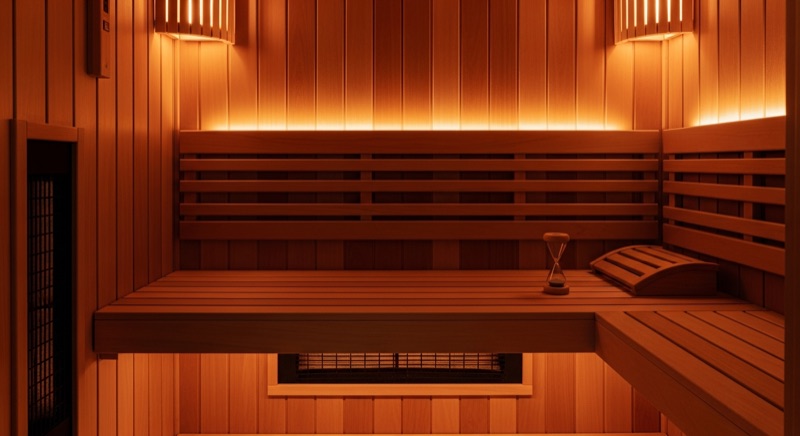
Lumen Heritage 4
Full-spectrum, ultra-low EMF (<0.2 mG), Canadian cedar build. Our top pick after 24 weeks of testing.
Written by
Aleksi Suoninen
Helsinki, Finland. Grew up with sauna as a daily ritual - Finland has more saunas than cars. Tests and writes about infrared sauna products from a Nordic perspective where heat therapy needs no justification.
FinlandIndependent tester