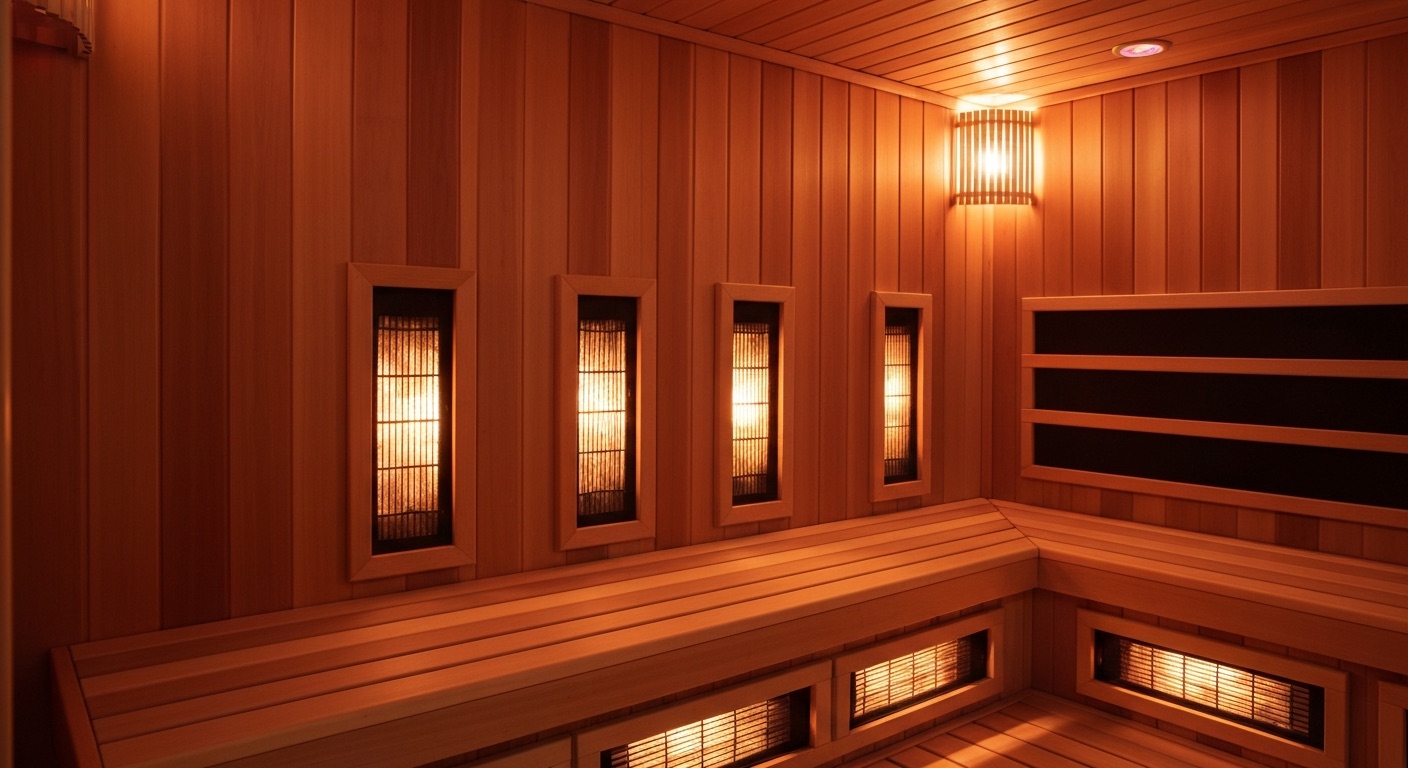
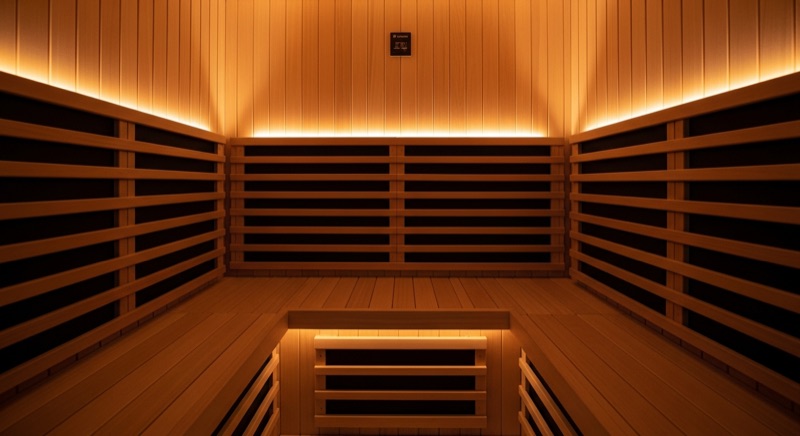
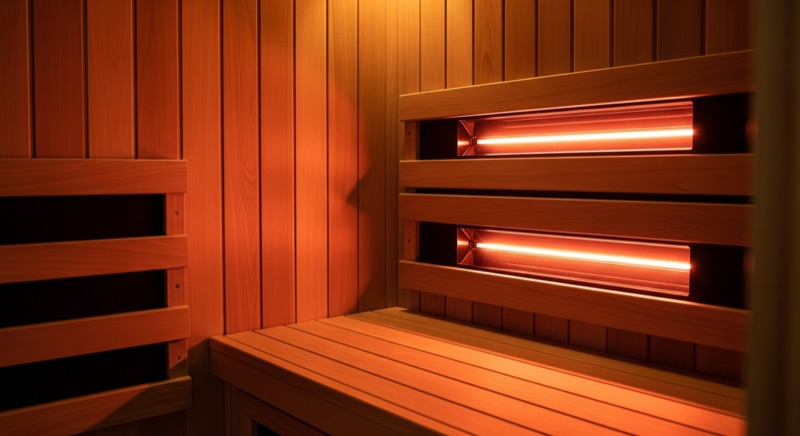
Infrared vs Traditional Sauna
One type has 20-year cohort data on cardiovascular mortality. The other costs $0.20 per session and fits in a studio apartment. They are not interchangeable - here is how to choose.
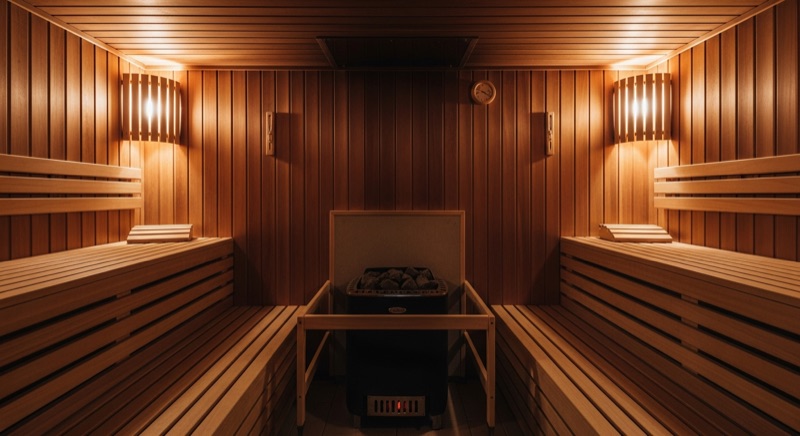
Quick verdict: which type suits you
- Prioritize the strongest cardiovascular evidence
- Want the authentic loyly steam experience
- Are an athlete doing heat adaptation for performance
- Have a dedicated outbuilding or cabin space
- Grew up with traditional sauna culture
- Want daily use at low operating cost
- Have heat intolerance, chronic pain, or fibromyalgia
- Live in an apartment without 240V dedicated circuit
- Need a unit assembled in under an hour
- Prefer sessions without intense steam heat
Side-by-side comparison
The numbers below are practical operating figures, not manufacturer maximums. Traditional sauna energy cost assumes a 6 kW heater at $0.13/kWh. Infrared assumes 1.5-2.5 kW at the same rate.
The science: what each type can actually claim
Traditional Finnish sauna - the long-form evidence
The most-cited research on sauna and cardiovascular health comes from Jari Laukkanen's cohort study of 2,315 Finnish men followed for over 20 years. Men who used sauna 4-7 times per week had a 63% lower risk of sudden cardiac death and a 37% lower risk of cardiovascular disease mortality compared to those who used it once a week. The dose-response relationship was consistent across the cohort.
This is traditional Finnish sauna data. The sessions were at typical Finnish temperatures - 160 to 180 F. The study cannot be extrapolated to infrared sauna, and it has not been. Laukkanen's group has been explicit about this distinction in subsequent publications.
Additional evidence supports traditional sauna for: blood pressure reduction, arterial compliance improvement, endothelial function, and post-exercise recovery. These are reasonably well-powered studies, not just associations. Heat stress from traditional sauna is also the foundation of established heat acclimatization protocols used in sports science.
Infrared sauna - smaller studies, real promise
Infrared sauna has a growing evidence base, but the studies are smaller and shorter-term. The most consistent findings are in chronic pain populations: patients with fibromyalgia, rheumatoid arthritis, and chronic low back pain report clinically meaningful pain reduction after repeated infrared sauna sessions in controlled trials. A 2009 Japanese study (Sobajima et al.) found significant improvements in New York Heart Association functional class in patients with mild congestive heart failure using far-infrared sauna - but this was a small, supervised clinical population, not healthy adults.
For cardiovascular benefits in healthy populations, infrared sauna is plausible - heat stress is heat stress to some degree - but the direct large-cohort evidence does not yet exist. Anyone claiming equivalence to Laukkanen's traditional sauna data is overstating what the infrared literature supports.
Where infrared has a real advantage: frequency of use. Because sessions are more tolerable at 130-145 F versus 170 F, and because heat-up takes 15 minutes instead of 50, most home infrared sauna owners actually use their unit. Daily use compounds whatever benefits exist. A traditional sauna used once a week because setup is inconvenient will always underperform an infrared sauna used five times a week.
Pros and cons side by side
Traditional Finnish sauna
Infrared sauna
Practical considerations: cost, installation, and space
Running costs over time
At four sessions per week, traditional sauna costs approximately $12-18 per month in electricity (6 kW heater, 60-minute sessions, $0.13/kWh). Infrared sauna at the same frequency costs $2-5 per month. Over five years of daily use - a realistic lifespan for a quality unit - the difference is $600-$1,000 in electricity alone. For someone buying a $3,000 infrared sauna versus a $3,000 traditional electric sauna, the infrared unit pays back its energy efficiency advantage within 3-4 years if used regularly.
Installation reality
Traditional sauna installation ranges from a dedicated outbuilding (most expensive, best thermal performance) to a prefabricated indoor unit requiring proper ventilation and often a 240V circuit. The wood, kiln-room construction, drainage consideration, and proper ventilation add $1,500-$5,000 to installation costs beyond the heater and wood.
Most 1-2 person infrared saunas ship as flat-pack kits that assemble with interlocking panels in 45-90 minutes. Smaller units (typically under 1.7 kW) run on a standard 15-amp 120V household outlet. Larger 2-3 person units may require a 20-amp circuit or a dedicated 240V line. No waterproofing is required. This is the primary reason infrared has captured the apartment and condo market.
The author's perspective: growing up Finnish
I grew up in Helsinki. There are 3.2 million saunas in Finland for a population of 5.5 million - more saunas than cars. Traditional sauna is not wellness tourism here, it is infrastructure. The Thursday sauna before the weekend, the lakeside sauna in summer, the smoke sauna at the family cottage - these are not amenities, they are the normal rhythm of a Finnish week.
From that background: I use infrared sauna daily at home because it is ready in 15 minutes. I use a traditional sauna when I want the real thing - the crack of the ladle on hot stones, the blast of steam, the cold lake after. They serve different functions in my life. The infrared unit is a health tool I actually use every day. The traditional sauna is an experience. Both are worth having if you can. If you must choose one, the question is whether you want the evidence or the convenience.
Verdict
If cardiovascular health is your primary goal and you have space and budget for proper installation, choose traditional Finnish sauna. The Laukkanen cohort data is the strongest evidence in the field, and you want your sessions to match the conditions that produced those results.
If daily use, low running cost, and simple installation matter more - or if you have chronic pain, heat sensitivity, or limited space - choose infrared. The evidence is less powerful but the frequency advantage is real. A session you actually take five times per week beats a session you take twice a month because setup is too demanding.
If you can have both: a traditional sauna at the lake or gym for deep sessions, and an infrared unit at home for daily maintenance. This is the honest answer most wellness writers will not give you because it does not force a winner.