Infrared Sauna in Portland
Grey winters, deep wellness culture, a real sauna scene, and a DIY-friendly community. Portland is one of the best-matched US cities for infrared sauna.
Portland is one of the US cities I find most legible from a Finnish perspective. The Pacific Northwest climate - wet, grey, and cool from October through April - creates the same psychological pull toward heat therapy that drives Finland's sauna culture. The outdoor culture (hiking, cycling, trail running) creates a ready-made athlete recovery use case. And Portland's strong counter-cultural and maker ethos means the DIY infrared sauna path is taken more seriously here than almost anywhere else in the country.
There is also a genuine sauna culture in Portland that goes beyond the branded chain studios. Bathhouses, Nordic-style communal saunas, and independent wellness studios have operated here for years, giving the market a baseline sophistication about heat therapy that newer markets lack.
Infrared Sauna Studios in Portland
Loyly Portland
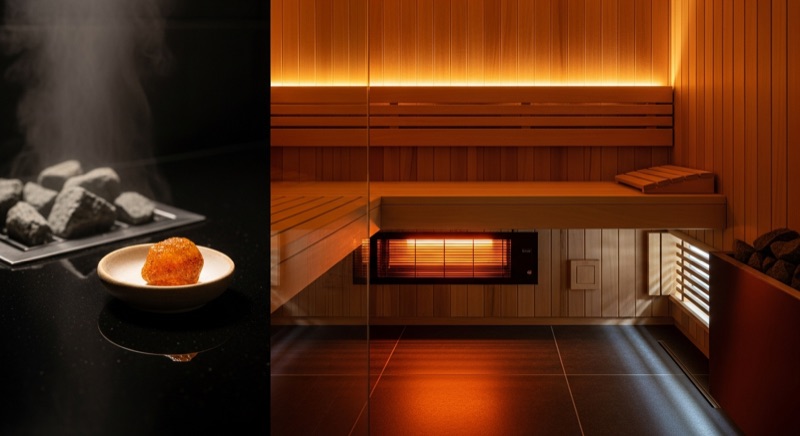
Loyly (named after the Finnish word for the steam burst produced when water meets hot sauna rocks) is one of the better-regarded sauna studios in the Pacific Northwest. They offer a traditional Finnish sauna experience alongside infrared options. For Portland residents who want both modalities, Loyly is worth checking first before the chain studio options. Check their current hours and booking directly.
Perspire Sauna Studio
Perspire has Pacific Northwest presence and Portland is part of their expansion footprint. Their private infrared pod format is a clean, accessible way to try far-infrared therapy specifically, and their session protocol (30-45 minutes at a controlled temperature) is good for calibrating your response before buying a home unit. Per-session pricing runs $45-65; memberships are available.
Independent Studios
Portland's independent wellness studio scene is active. The Alberta Arts District, Hawthorne, and Mississippi Avenue neighborhoods have wellness-focused businesses that have offered infrared sauna alongside float therapy, massage, and other recovery services for years. These often have more flexible booking, communal pricing options, and a less corporate atmosphere than the chain studios. Quality of equipment varies - worth a visit to assess the cabin age and condition before committing to a membership.
Buying a Home Sauna in Portland
Housing Profile
Portland's residential neighborhoods are dominated by Craftsman bungalows, Victorian homes, and mid-century houses - many with large covered porches, full basements, and attached garages. Inner SE, NE, and N Portland neighborhoods (Hawthorne, Division, Mississippi, Woodstock, Alberta) have SFH stock with enough interior space for a 1 or 2-person cabin sauna.
Apartments and condos are concentrated in the Pearl District, South Park Blocks, and along the major transit corridors (NW 23rd, Division, Belmont). Buyers in these buildings are looking at 1-person 120V units that fit in spare bedrooms without electrical modifications.
Electrical and Older Homes
Portland's residential stock skews old. Craftsman-era bungalows (1910s-1930s) sometimes have original electrical panels that have been partially updated but may still have 100-amp service or older wiring configurations. Before purchasing a 240V 2-person unit, verify your panel capacity with an electrician. The cost to add a dedicated circuit in Portland is typically $150-300 if your panel has capacity; a full panel upgrade runs $1,800-3,500.
For most Portland bungalow owners, a 1-person 120V unit is the path of least resistance. The smaller footprint is also more appropriate for many Portland homes, which tend toward cozy rather than expansive interior spaces by national standards.
The DIY Option
Portland is the US city where the DIY infrared sauna guide is most relevant. The maker and fabrication community here is active - Makerspace PDX and similar organizations exist as genuine resources. A DIY infrared sauna built from an infrared panel kit (available from several suppliers) inside a cedar shell costs $800-1,500 in materials and a weekend of work. It requires basic woodworking skill, electrical comfort for low-voltage connections, and patience with sourcing.
The advantage over a pre-assembled unit: full control over panel placement, wood species, interior dimensions, and the option to build to a specific space rather than around a standard footprint. The disadvantage: no warranty on the build itself, more time investment, and the electrical connections require care if you are not experienced. Our DIY infrared sauna guide covers the full build in detail.
Climate and Winter Use
Portland's winters are not as cold as Boston or Chicago - lows rarely drop below 25 degrees Fahrenheit. But the persistent grey overcast and wet cold from October through April is psychologically taxing in a way that sharp, sunny cold winters sometimes are not. There is no "bright side" to the Portland January; it is just grey and wet for weeks at a time. The psychological benefit of a 30-minute infrared session on a dark, rainy morning - that specific heat-induced calm - is something Portland users consistently mention as the primary value driver.
Nordic Scandinavian heritage in the Pacific Northwest also plays a cultural role. Norwegian and Finnish diaspora communities have been in Oregon for generations, and there is a regional familiarity with sauna culture that predates the modern infrared studio trend.
Cost Comparison: Studio vs. Home Unit
Portland is one of the few US markets where the DIY option genuinely competes with pre-built. At $800-1,500 for a DIY build vs. $1,800+ for the cheapest pre-built, the cost difference is real for buyers with the skills and inclination. For everyone else, the pre-built 1-person market is the right starting point.