Infrared Sauna Temperature: The Right Settings for Beginners and Regulars
People switching from traditional saunas are often surprised to find 140 F on the infrared dial feels hotter than 170 F in the Finnish wood-burning room they grew up with. That is not the thermostat malfunctioning. Infrared energy heats tissue directly, not the air around you, so the mechanism is fundamentally different - and the right temperature settings follow from understanding that difference. This guide covers the numbers that matter: beginner ranges, research-protocol ranges, and the goal-specific settings that most manufacturers bury in vague language.
Why Infrared Saunas Run Cooler Than Traditional Saunas
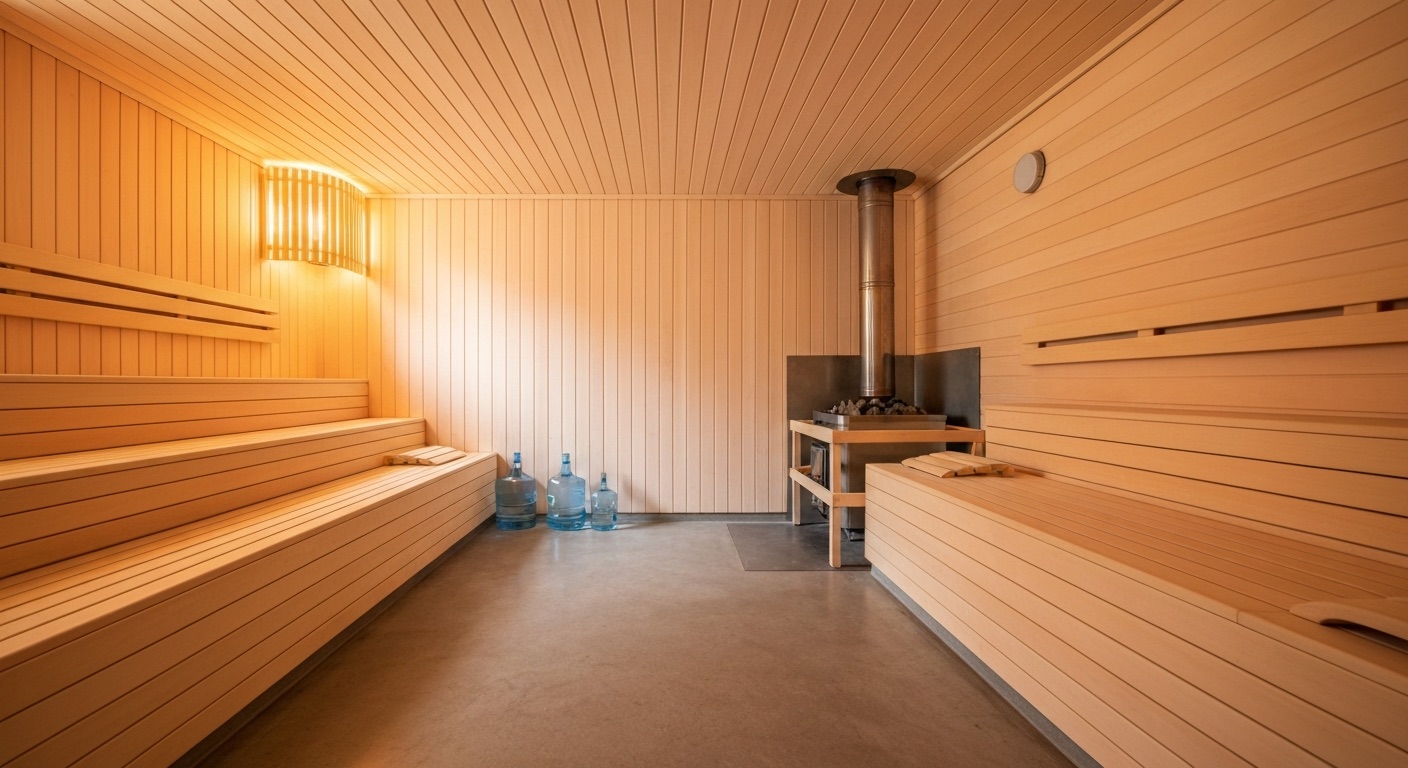
Traditional Finnish saunas heat the air to 150-195 F (65-91 C). You then absorb that heat through convection - the hot air transfers energy to your skin, which transfers it inward. The process requires high ambient temperature because air is an inefficient heat carrier.
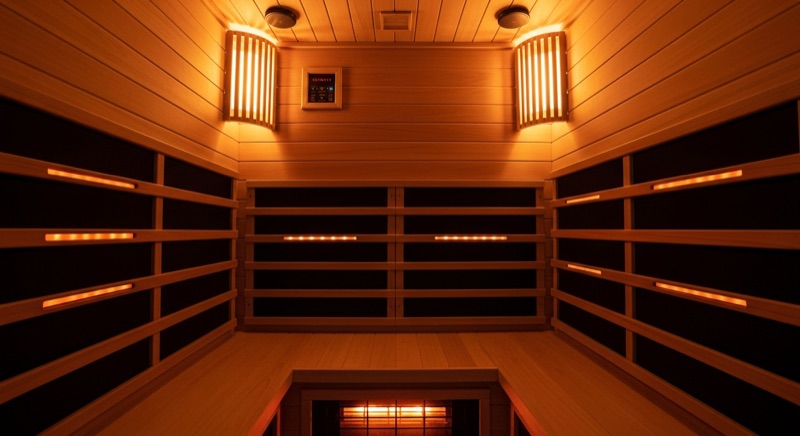
Infrared panels emit electromagnetic radiation in the near-, mid-, or far-infrared spectrum. This radiation passes through air without heating it and is absorbed directly by skin and subcutaneous tissue. Your body warms from the inside out rather than the outside in. The result: you achieve the same core temperature elevation and sweating response at 120-140 F ambient air that would require 170-190 F in a traditional sauna.
This is not a marketing claim. It is physics. The implication for temperature settings is that you should ignore your intuition from traditional sauna experience when dialing in an infrared unit, especially for the first few sessions.
Operating Range: What Your Sauna's Dial Actually Means
Most consumer infrared saunas have a maximum temperature of 140-155 F. A few premium units reach 160 F. This is the air temperature at the sensor position, which is typically mounted at chest height near the control panel. The temperature at the carbon panel surface is considerably higher; your back or calves directly against the panels experience radiant heat, not the ambient reading.
This matters for beginner guidance. A unit set to 120 F with good carbon panel coverage - meaning panels on the back wall, side walls, and calf position - delivers more heat to your body than a unit set to 120 F with only a back panel. When you read temperature recommendations, assume adequate panel coverage. If your sauna has limited coverage, you may need to reduce the set temperature by 5-10 F to get the same perceived and physiological effect.
Preheat time for infrared units is 10-20 minutes, with most reaching target temperature in about 15 minutes. You can enter at the start of preheat if you want a gradual warmup - many experienced users prefer this - or wait for the unit to reach temperature first.
Beginner Temperature Protocol: The 6-Week Ramp
Starting too hot is the most common first-session mistake. Your cardiovascular system needs to adapt to the thermal load, and your sweating mechanism needs to activate efficiently. Going straight to 145 F on session one does not accelerate benefits; it increases the chance of dizziness, nausea, or a miserable experience that prevents you from returning.
The following protocol is derived from the progression ranges used in most infrared sauna intervention studies that included beginner-to-experienced participant populations:
By week 6, most people are comfortable in the 130-145 F range for 30-45 minutes - which matches what the majority of published research studies use as their standard protocol.
Temperature by Goal: A Reference Table
The relationship between temperature and therapeutic effect is not linear beyond a certain point - higher is not always better. These ranges are derived from clinical study protocols and from the physiological logic of what each goal requires:
Temperature vs. Duration: They Are Interchangeable Up to a Point
Research on passive heat therapy consistently shows that thermal dose - a combination of temperature and duration - is what drives adaptation, not either variable alone. A 45-minute session at 125 F delivers a similar thermal load to a 30-minute session at 140 F. Both approaches appear in the literature and both produce equivalent physiological responses in most protocols.
This has a practical implication: if you are time-constrained, run a higher temperature for a shorter duration. If you find high temperatures uncomfortable or have cardiovascular concerns, use a lower temperature for a longer session. The evidence does not favor one approach over the other for general wellness goals.
The tradeoff is not symmetric for every goal. Cardiovascular studies tend to use the higher end of the temperature range for 20-30 minute sessions, because the heart rate elevation is the target and that responds more to temperature than to duration in shorter windows. For relaxation and sleep improvement, lower temperature for longer duration tends to feel better and avoids the stimulant effect of running hot.
Three Temperature Mistakes People Make Consistently
1. Starting at maximum temperature. The urge to go straight to the top of the dial on the first session is common, especially among people who use traditional saunas and underestimate how different the radiant heat mechanism feels. The result is usually a short, unpleasant session that puts people off for weeks.
2. Equating cooler air with less benefit. A well-calibrated 125 F infrared session with full panel coverage delivers meaningful thermal stress. The air temperature does not tell the whole story. Your sweat output and heart rate elevation are better proxies for whether the session is working than the number on the display.
3. Chasing temperatures above 150 F. There is no published evidence that infrared sauna benefit continues increasing proportionally above about 145 F. Units that reach 160 F are not inherently superior to those that max at 145 F - the extra thermal stress just adds cardiovascular load without additional documented benefit. The sweet spot for experienced users is 130-145 F for 30-45 minutes, which is precisely what the bulk of infrared sauna research literature uses.
Frequently Asked Questions
What temperature should an infrared sauna be set to?+
Why is an infrared sauna cooler than a traditional sauna?+
Is there a benefit to going hotter than 145 F in an infrared sauna?+
How long does an infrared sauna take to heat up?+
Continue reading
All guides →