How to Clean an Infrared Sauna: What Works, What Damages It, and How Often
The interior wood in an infrared sauna is bare - no sealant, no finish. This means cleaning products absorb directly into the wood and can off-gas when heated. Most people clean their sauna with products that are actively damaging it.
Infrared sauna interiors are bare, unsealed wood. No bleach, ammonia, vinegar (prolonged contact), or commercial wood cleaners. These absorb into the wood and release chemicals when heated. Use diluted mild dish soap on a damp cloth - that is essentially the entire approved product list for wood surfaces.
Safe products by surface
Wood care: the details
The interior wood - typically Canadian hemlock or Canadian red cedar - is left bare intentionally. Sealants and varnishes off-gas volatile organic compounds (VOCs) at sauna temperatures, which defeats the purpose of using an infrared sauna for health. The wood breathes, expands, and contracts with heat cycles. Your cleaning products need to work with this.
Mix 1 part mild dish soap with 10 parts water. Dampen a cloth - not soaking wet, just damp - and wipe surfaces in the direction of the wood grain. Follow with a clean, barely damp cloth to remove soap residue. Leave the door open after cleaning to allow the wood to dry completely before the next session.
Never use oil-based products on the interior wood. Oils block the wood's pores, trap moisture, and create conditions for mold. Tung oil, linseed oil, and similar wood conditioners that work well on furniture are counterproductive inside a sauna.
The bench: your most important surface
The bench is where direct skin contact happens and where sweat accumulates most. It needs attention after every session. A damp cloth wipe takes 30 seconds and prevents sweat from saturating the wood grain, which would require much more intensive cleaning later.
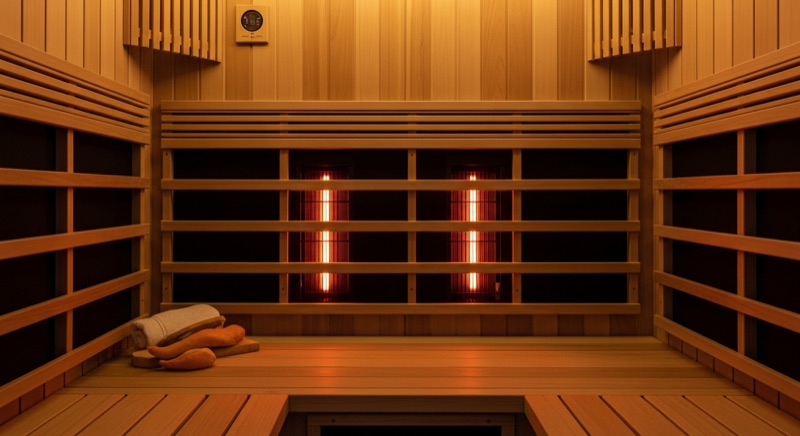
Using a towel on the bench during sessions is the simplest way to extend time between deep cleans. The towel absorbs the majority of sweat, you wash the towel, and the wood stays dry. This approach significantly extends the life of the bench wood and reduces the overall cleaning burden.
For deeper weekly cleaning of the bench, use the same diluted dish soap solution, allow it to work for 60-90 seconds, then wipe clean with a plain damp cloth. Do not leave any soap solution sitting on the wood.
Heater panels: dry cloth only
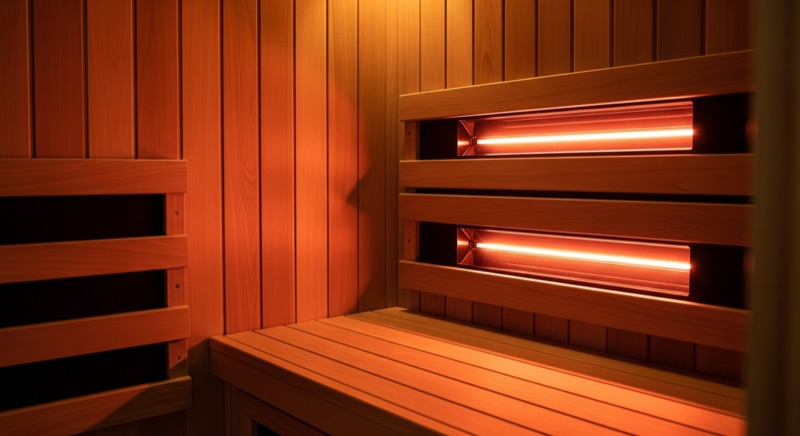
Carbon or ceramic heater panels are sealed units. Dust settles on them over months, which can create a slight burned smell during heating cycles. A dry microfiber cloth wiped across the panel face removes accumulated dust. Do this with the unit powered off and fully cooled.
- xSpray any liquid on heater panels - liquid contact can damage wiring or create a short
- xPressure wash or steam clean the interior - excess moisture penetrates the wood and electrical connections
- xUse bleach, ammonia, or commercial bathroom cleaners on wood surfaces
- xApply polyurethane, varnish, or any sealant to interior wood
- xLeave the door closed after sessions - moisture must escape
Dealing with odor
A properly ventilated sauna that dries completely after every session should not develop persistent odor. If yours has, the most likely cause is moisture trapped in the wood from sessions where the door was closed immediately afterward.
The protocol: leave the door open for at least 30-60 minutes after every session. If a musty smell has already developed, prepare a solution of 3% hydrogen peroxide diluted 1 part H2O2 to 4 parts water. Apply sparingly to affected wood surfaces with a cloth, allow to sit for 5 minutes, then wipe with a clean damp cloth. Let the sauna air out completely - door open, ideally 2-3 hours.
Hydrogen peroxide breaks down to water and oxygen and does not leave chemical residue. It is one of the very few odor treatments appropriate for bare sauna wood.
Full maintenance schedule
- +Wipe bench with lightly damp cloth
- +Leave door open 30-60 minutes to air out
- +Remove towels used during session
- +Wipe all interior wood surfaces with damp cloth
- +Clean glass door with glass cleaner
- +Sweep or vacuum the floor
- +Deep clean bench with diluted soap solution
- +Mop floor with plain water
- +Visually inspect heater panel connections and wiring
- +Inspect wood for mold, discoloration, or cracking
- +Check door seal and hinges for wear
- +Wipe heater panels with dry cloth
- +Tighten any loose assembly hardware